Friday, December 16, 2022

First World Problems


Okay, developed world. Are you ready for a spray?

Auckland sucks. And it sucks in the same way that Sydney sucks. In the same way Vancouver sucks. Toronto. Seattle. London.

You all suck.

Okay, it's just 48 hours, between flights and layovers, since I've left Colombia that I arrive in Auckland, but all is fair game for what The Solonaut does—compare cultures.

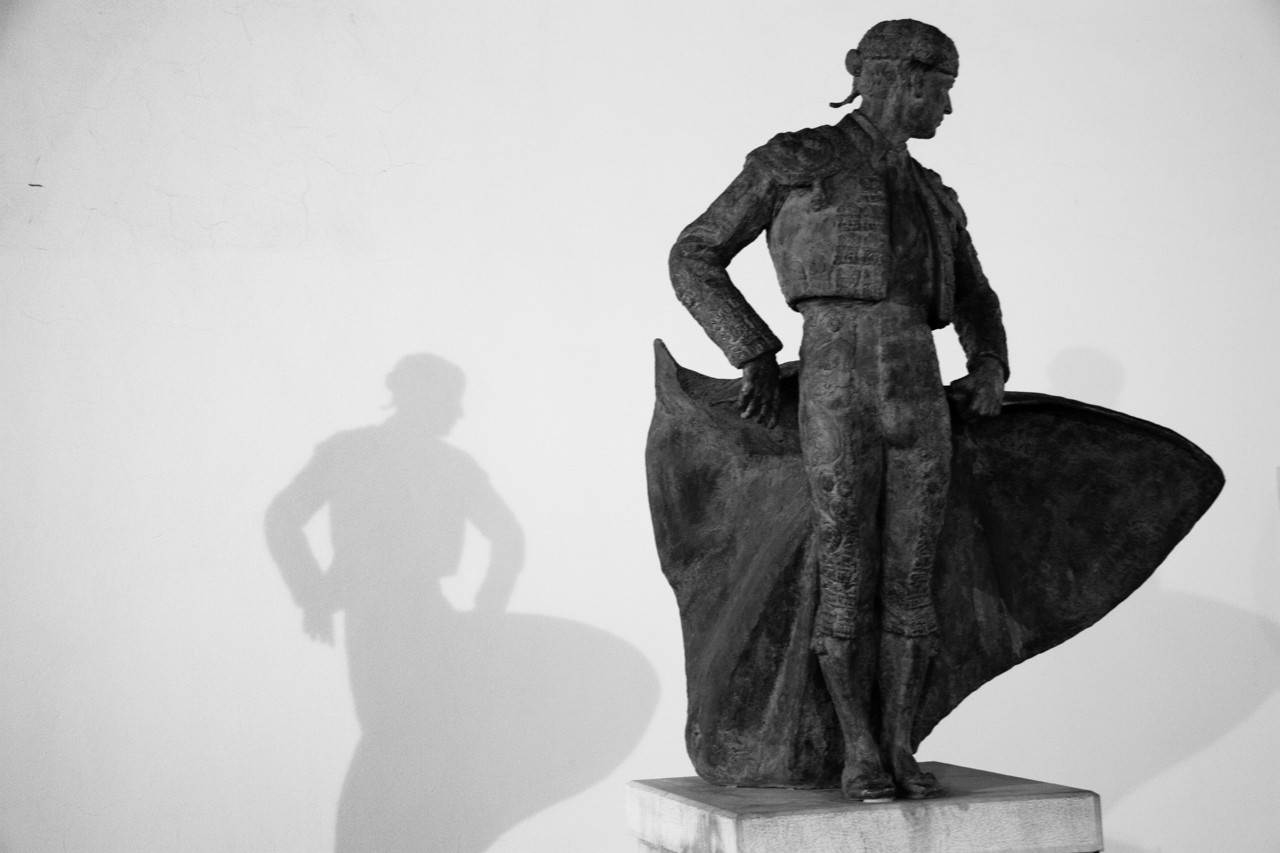
I must still have the pulse of Spanish in me after a month in Latin America, as I seek out a tapas restaurant bedecked in bullfighting posters, Picasso's Don Quixote and pictures of Salvador Dalí's moustache. I keep instinctively thanking the kiwi staff gracias. They must think I'm a wanker. The ambient music alternates between flamenco and Latin rhythms, and two pints in I'm really enjoying myself. Then reality intrudes, jolting me back to New Zealand.

Two suits sit at the table next to mine for a social post-work pint. And what do they talk about? Music? Women? Family? The party last week? Conjecture on the concurrent World Cup? 

Nope. They talk shop. Seed funding for the project. Strategic investment. Cost projections and data corridors and team management and revenue. In fact, within five minutes of sitting down, one of them fields a ten-minute phone call from his team to whom he needs to give direction, leaving his disregarded table mate to resort to phone scrolling from boredom. This automatous race of beings are the dullest, most boring people in the world. They bore each other and themselves and everyone around them.

It puts me in mind of a Valentine's Day I once spent at a restaurant with my girlfriend. Specimen A dating a girl at the next table fields a phone call for which he leaves the table, going outside to laugh, guffaw and gesticulate, as observed through the big restaurant windows, for fifteen awkward, uncomfortable and humiliating minutes for his relegated date as he presumably effused over news of his mate's new PlayStation. It was hideous. I didn't know who to be embarrassed for.

But the team management phone call is only a brief respite: Robot 2 returns to the present with Robot 1 and resumes discussion of seed funding, strategic investment, cost projections and data corridors.

If this happened at all anywhere in earshot in Colombia I was spared by my ignorance of the language. But believe me—it didn't happen. From the life-embracing, war-emergent Medellinenses to the Costa Ricans' identification with la pura vida to the huge festivities in Mexico celebrating the dead who punctuate life, Latin America is too vibrant with the understanding of what it is to live to fall ill to that infection of fiscal thinking at a tableful of food and beer.

But this isn't the worst of the modern social dining experience. 

Now, I'm old and grumpy. Generation X, who saw in the Internet, are in their mid-lives now, and the cohort we share with Millennials saw in "Web 2.0" social media. But there's a Millennial-Zoomer phenomenon, egregiously shared by proud X parents and Boomers, that does my head in: TikTok on speakerphone. At least when Facebook appeared it shut the fuck up. People might show each other pics on their phones and blurbs in their feeds, but it was relatively silent, even if it did introduce the unsocial phone gaze. But now... honestly... is there any such thing anymore as a restaurant meal in peace?

Every bloody time I go to a restaurant, which has been frequent as I'm travelling—everywhere—there'll be at least one table where someone has the need to share their boyfriend's/best mate's/daughter's adventures/pranks/performance on TikTok. Headphones and Bluetooth are too protracted for sharing so it's always on disruptive speakerphone—tinny, jangling, attention-demanding, table-invading, distracting racket. In the hands of complete morons it's blasted at top volume. It is the perfect storm of social technology, corporatised default settings, and 21st-century autocentricity.

I don't know. People lose touch with how to socialise, how to behave, how to just be. We're all just another algorithm in the silicon economy. It sucks.

Just go away and let me eat in peace.

Thursday, December 01, 2022

It's the hat.


I've been at this Spanish thing now for a month. I speak a little, somehow. I've never taken a proper course in it or even studied it in high school, but there is a kind of facility between the Romance languages, and French I have studied. My good mate Kayo and I fumbled our way through Cuba and Mexico some years ago, leaning on each other's piecemeal comprehension, but this time I'm on my own. I even brought a grammar book with me to study but, as always when I travel, I pack books I don't read.

When I was in Costa Rica a few weeks ago I hired a driver to get me from San Jose to Arenal to climb the volcano. I manage to say roughly what I mean in my clumsy Spanish but my comprehension is poor, so he would answer me in his competent English. After an hour of this I asked him how are my Spanish skills. "Bueno!" he replied, but I'm not entirely sure he wasn't simply being polite. I did tip him.

Today in Medellín, Colombia, I was stopped in the street and asked right off the bat by an elderly gentleman carrying a cane where I was from. You know, I really try not to look like a tourist but it's hard to know what gives me away. Okay, I'm a gringo, but I'm not the only one in Medellín. Some live here, and some Colombians look like gringos. Carrying a knapsack usually adds to the tourist stereotype, but plenty of Colombians carry one themselves, and anyway, I've intentionally left mine back at the flat where I'm staying. 

Is it the fashion difference? Between my clothes and what you generally see on the street? It's not that I'm dressed up—again, I try to blend in—but the colloquial style of a people is often intangible, ineffable, and tricky to replicate. 

After first being stopped by a mohawked bracelet hawker in Poblado, Medellín's upmarket touristic quarter, with "Hey, Kangaroo Jack!" (yes, I bought a bracelet from him—his name was Daniel, he was friendly and amusing, and it cost $3), then later at a residential Laureles intersection receiving a thumbs up and verbal appreciation from a squeegee-wielding windscreen cleaner, I realised with some strike to the head by the bleeding obvious that it's the hat. My signature Jacaru Swagman. It's kind of a stupid conceit when I'm always trying to blend in, but this hat is as well-travelled as I am, and guys get attached to their hats, don't they? Baseball caps, for example. It becomes an expression of themselves. 

If hats worn here aren't baseball caps they're Panama hats, and indeed the elderly gentleman with the cane who stopped me in the street was wearing one. I answered him where I'm from (Australia and Canada) and tell him in Spanish that my command of the language is weak. And yet we then commence chitchat in Spanish, and he helps out with his passable but heavily accented English. Granted, many of my small talk answers are practised but, nonetheless, I always amaze myself that I can manage rudimentary conversations. 

He's a friendly, old-school Colombian gentleman of 75 whose brother-in-law emigrated here from England as an engineer of some kind. He asks what I think of the women in Colombia, the beauty of whom I think Colombian men take pride in, given that this isn't the first time I've been asked. He asks if I'm married and says he is sorry to hear I'm divorced. Colombians are strong Catholics. It's too complicated to explain that this was 30 years ago and that marriage/divorce is not much relevant in my culture. "Maybe you will marry a Colombian girl," he says. "But be careful—they can be dangerous!"

After our amusing little chat ends and we wish each other well and part ways, I stop for some groceries and walk back to my flat. En route a woman stops me and begins asking in Spanish for directions. I'm all ready to open with No soy de aquí—I'm not from here—but while she's speaking she shows me the handwritten address of the supermarket on the piece of paper in her hand, apparently spying by my bags that I've just come from there, and I realise I can answer her. Pausing for a moment, I then point and steer with my hand the direction of the curving road I've just walked up and say, "al fondo!"—at the bottom, the end of the road. She smiles as effusively as I do, she pleased that she has her answer and I that I'm capable of delivering it.

Though it will soon be something of a relief to be able to express myself in a land of spoken English, I walk back to my room sure now of one thing: to blend in, ditch the hat, carry groceries and learn the bloody language.

Sunday, November 27, 2022

The Final Ride


I was in tears today.

The horse ride has lasted a week. There are seven other riders, including the lead guide, Marc, and his adjutant Carlos who brings up the rear of the file. Two of the riders I've ridden with before: Sharon in Turkey and Susan in both Turkey and Mongolia. Endurance riding in foreign countries is kind of a niche thing to do, so there aren't that many organising outfits and inevitably you meet up with some of the same people again, even ten years later. 

As always, I'm the least experienced rider. Horse people tend to be dedicated to the lifestyle, for reasons beyond me and the scope of a blog post, but not least because it is no small effort to own and care for a horse. In any case, I'd estimate my hours in the saddle at about a hundred. None of the other riders would be able to count theirs.

So I'm always open to and asking for tips. This is a tricky business, because horse riding is quite a subtle exercise and all the things you need to do are remembered in different ways by different people, who find some tips more meaningful than others. Do you keep your heels down or your toes up? Do you balance in the canter with your knees or your thighs? Is manipulating the bit with the reins like cradling a bird or like squeezing an avocado in the shop? Learning is parsing what people tell you and deciding whether or not to take it on board. You can't listen to everything because some of it seems to contradict, there are different styles of riding (Western vs English, for example) and indeed different riders will have different ideas. I've even heard some horse people described as bitchy; you can imagine conflicts of opinion over something they care deeply about. 

Not these riders, though. We are a team. All week I've been accruing tips from the others, and the last day would be our biggest ride—8-9 hours in the saddle. Marc warned me it would be a tough day, even for the experienced riders, but he had confidence I could do it. There were a few things I needed to be mindful of, such as my balance in the canter and my posting in the trot as we'd be covering a lot of ground, but I could do it.

We were up at 6am with the crowing roosters to hit the trail by eight. Our first day riding (not counting familiarisation time with our horses, mine being the hardy Criollo paint El Greco) was almost as long as this one would be, perhaps seven hours, but was a bit gentler with more time out of the saddle leading the horses on foot over steep terrain. 

At the end of that day my right ankle was really sore. This is a strange place to be sore from riding and led us to consider my stirrup length. Different riders are different shapes with different length legs and different riding preferences (not to mention different tack on different horses), so adjusting stirrup length is routine. But for seven hours of ignorance I unknowingly rode with not only my stirrups too short but one shorter than the other. This was easily resolved on the second day with a length that relieved my long legs and gave me much better contact with the horse, but I suffered the recovering ankle for the rest of the ride. 

Like every other day we ride single file, out of rural towns along the road edge where countless restaurants and cafes abut the road—there is no kerb or pedestrian space—where dogs constantly harangue our well-trained horses that never spook; into thick jungle that encroaches on the road, sometimes nearly taking it over; up constructed horse trails amid coffee plantations and into the slick Andean jungle proper. 

Then we hit our first big hill. To take us to the top we tackle it with a canter to gather momentum. This would be my test, a culmination of all the things I've learned and the tips I've collected, my chance to prove Marc's faith in me and to give back to the team with my competence to keep up with them. Not that this is my first canter, nor ours as a team, but it's my least practised gait. 

Everything shifts into a different position and up we go. I keep my heels aligned below my ears to maintain balance in the saddle, while simultaneously pitching my weight gently forward over the withers so not to deadweight the horse. I'm last in the file but for Carlos, and the clatter of hooves in front of me tattoos a satisfying rhythm in the jungle, urging us on. "Come on, Greco! Yah, yah!" I encourage. He gives so much. We keep up, I keep up, clatta-ta clatta-ta clatta-ta, pressing, spurring him on... and then, halfway up the long, steep hill, I tip forward and our balance goes off. His canter breaks. The rest of the team races away as El Greco is reduced by gravity to a walk.

I'm devastated. The hill is so steep I can't get him back up, even into a trot. Carlos stays with me, but we step, step, step up the long grade with the sound ahead of racing hooves disappearing away into silence. It's awful. I've cruelled the pitch. Events overtake me.

It's ages before we see the top of the hill where all have stopped to wait for me. I'm crushed low to see them. I'm so disappointed in myself and I've let the team down. I'm apologetic. I try to explain.

Of course, no one thinks anything of it but it's a good hour before I manage to regain my composure. I keep back in the queue and pull up my bandana to mask my face and my welling eyes. This upsurge of emotion surprises me. It's been a hard week, this is a hard day, we've all been through so much together, and I am really trying. I've let Greco down; he can do it, but I can't. 

Down the other side of the mountain we descend, leaning back in the saddle to shift our weight for the horses. It's so steep it's precarious, but Greco is sensible and the horses are sure-footed, despite the occasional slip. 

After half an hour of this we level out and rejoin a trafficked rural road. The occasional vehicle lumbers past us, tooting its horn, and intermittent motorcycles race behind them. But suddenly we approach them again from behind, backed up, with drivers out of their trucks milling about, looking down over a lip where the road falls away. It's a washout. The road is gone. The mountainside has taken it out. It seems an ongoing battle between constructed roads and sodden mountains here. As we get close to the edge we see down into the maw of the abyss (as we all afterwards refer to it); looking back at us is a truck stuck on the rise, driver's head out the window. No one believes that the five or six men (locals, it turns out, there for the afternoon entertainment) on a half-inch rope tied to the front of the truck are going to accomplish anything. But with it over their shoulders like the winning leg of a tug-of-war, they crest the lip of the abyss at a run, big smiles on all their faces. Up comes the truck. 

For horses, it's no problem. We dismount, guide them through the throng of vehicles and people, ably aided by Pete from our logistical support crew who turns up in the work truck looking authoritative in orange vest wielding a "PASEO" (slow) sign.

An hour or two later in a sudden but regular late afternoon rain we finally arrive at the stables where we will say goodbye to our horses. We dismount, untack, and Marc approaches me... to congratulate me on my performance. I lament to him my failure on the hill and he reassures me; he says even he, with all his experience, sometimes loses his balance in a canter. I didn't let down anyone. I kept up, controlled my horse, and we arrived on time. I should be pleased, he says, at the day's accomplishment. It was a hard ride, even for the experienced.

I go to say goodbye to Greco. I wrap my arms around his neck and I can barely keep from blubbering. They give so much, Marc says, and he's right. Greco worked so hard, for me, for what I asked him to do. You really forge a bond because of the hard work you do together. After all, the zenith of good riding is to become one with the horse.

I go to my room, get in the shower stall, turn on the water and, in my first moments alone, it all comes out: all I can do is bawl. A full release of the whole day's emotions. I'm proud of myself, humbled by the challenge, relieved at the success and sad it's all over... it's all too much. My sobbing tears merge with the water streaming down my face.

I did it.

Friday, November 25, 2022

Horse riding is hard

I'm not a beginner at this. I've done it before—endurance riding in Turkey and Mongolia, a week or two each time. Eight years has elapsed since then, so in preparation for Colombia this time I kept up my running fitness and got some practice in the ring to rebuild my confidence. 

It's important to have confidence on a horse. The horse needs to know you're the boss. And the first thing it will typically do is find out if you are. It will try to do what it wants rather than what you want, by going slow, eating grass, or choosing the direction. This is the first test of firm and just confidence.

Engage the horse. It is not a car. You're not a passenger. This is not a pony ride at the Easter Show. If you're not engaging with the horse on every single step then you're not riding. When you drive, do you take your hands off the wheel and your feet off the pedals? Riding horses needs a similar amount of attention, and actually more. 

The horse's bit (that piece of hinged metal in its mouth) should always be engaged, gently, with the reins. Just like keeping a car in gear; coasting in neutral is dangerous, isn't it? But more than this, horses are not machines. They are individuals with personalities as varied as dogs and people, are of different ages with different energies, and they are social creatures with a dynamic language between them that you need to read—language that includes kicking and biting. 
 
The idea is not to allow this or foment it, and to prevent it with awareness by not crowding them. Be the boss to whom the horse listens. And to be that you need to be competent and confident, and also kind, not brutal. If you bond with the horse and be likeable so it likes you, it will give all you ask of it. Perhaps some cruel riders could disagree on that point and insist you can dominate a horse with discipline—which indeed is also necessary—but to my mind (and to most riders) the horse will give more when asked to a kindly rider than to one that whips it with a riding crop.

This is the third and hardest endurance ride I've done. Every ride is different, for so many factors, but what makes this one so hard is the control. Unlike in Mongolia, where the horses are half wild and the landscape is a wide and vast steppe that invites wandering recces, this is a very controlled ride—up steep mountains and down into narrow valleys, single file on narrow jungle paths and rural road edges, not uncommonly with cars or motorcycles passing within feet and dogs shooting out randomly, barking and snapping.

You need correct posture and to adjust it with the terrain; to be aware of your shoulders, which will turn the horse; to control the pace and not allow the horse to decide it; and to maintain tight contact with the horse through your legs, your pelvis, and the bit.

And this is all just at a walk. At a trot you need to post—rhythmically rising in the saddle with the gait—and you need to time this with the horse's pace so you don't stall the trot. (The exception here is with the Colombian Paso Fino blooded horses, ridden by some more experienced riders in the group, which have a different gait that smooths the trot and eliminates the need to post.) At a canter you need to be up out of the saddle and rolling fluidly with the horse, holding yourself in position and balancing with bent knees as the horse "rolls" under you like a sea swell.

It is a workout. You need to be fit, with strong core muscles and strong leg muscles, the latter of which are a different set than a human seems to usually use. This, to beginners, is a sore and surprising discovery the following day. 

And actually, not only to beginners.

Tuesday, November 15, 2022

Resorts are stupid

Cancún. Famous for being a resort town. The stunning 25km-long narrow isthmus separating the lagoon from the sea is named the Hotel Zone, for the blatant reason that one resort abutting another claims its ocean frontage there as far as the beach will stretch. It must have once been a place of incredible natural beauty before it was so exploited. 

Did you know that there are no bodies of water on the entire Yucatán peninsula? No rivers, no lakes, only cenotes—deep limestone sinkholes full of water that are unique to Yucatán (thought to be a geological result of the Chicxulub meteor that struck what is today the neighbouring Gulf of Mexico, wiping out the dinosaurs). Cenotes were sufficient for the original population of Maya but can't sustain all these luxury resorts. I believe water is piped into the peninsula and that water shortages are common. Teeming throngs of tourists flock here to sit on their fat arses and be pampered. It's not travel. It's barely tourism, and it's frankly tasteless.

I'm on a layover to Costa Rica from Oaxaca. What a contrast it is with that poorest of Mexican states second only to Chiapas. I figured I'd try a resort for one night en route, but it's hard for the Solonaut to enjoy it.

My first experience here is one of lost luggage. My second is price gouging. Getting out of the airport and to—well, anywhere—is subject to the taxi monopoly. Numerous companies compete with one another for the business, but conspire to keep the price extortionate—MX$850 (about US$50) for a 10km trip, down from MX$950 when I complained it was ridiculous. Hey, stupid gringos, right? They all give the same answer: "It's because it's so busy!" Bullshit. This gringo is no greenhorn.

At the resort, there is pumping music at the pool area facing the beach. This shortly mutates into a kind of lame name-that-tune pub quiz for old morons. There are four or five teams soaking in the pool while the MC plays the first five seconds of hit songs you need to identify. Whitney Houston, Queen, AC/DC—nothing strenuous or beyond the 1980s.

Over at the towel bar is a billboard promoting the program of events, like a cruise ship needing to entertain its trapped passengers. Rising cynicism keeps me from reading it. Walking to my room I receive a look from a young pretty thing I haven't had since sitting at a pick-up bar. Is this part of the resort appeal? Hook-ups for singles? This really is a foreign place.

Everywhere it's nothing but coddling and pampering. Spoiled indulgence. Drinks served to your beach lounge chair. Massages. Spa. Whatever service you need.

For readers who haven't twigged, I have an active dislike of this. Opulence and luxury. Don't baby me. I want to take some responsibility for the things I do. Of course I don't deny help and I appreciate assistance for the culturally ignorant traveller that one always tends to be, but I want to deflect touts, fend off pickpockets, and make mistakes. I want to muddle my way through the language, get lost and do as a local does. I want to get my hands dirty. 

Here in Cancún, they'll bloody well wash your hands for you.

Friday, November 11, 2022

Luggage

I'm not sure I'm enjoying this.

Bloody Volaris Airlines. First, two weeks before my flight out of Oaxaca, they cancel it and propose an alternative four days later—um, no thank you?—requiring me to research and book new routes while I'm on the road. That cancelled flight was direct to Cancun, where I would stay in transit as a staging post for one non-refundable night at a resort I booked (more on that later). So, trying to preserve some of my spent money, I book new flights with my Volaris credit to get to Cancun via Mexico City—two flights now, so more expensive. Had I known this a month ago I'd have just booked a night in Mexico City in the first place, en route to my next destination, Costa Rica.

Okay, so Oaxaca is pretty crazy with tourists at the moment. It's the day after the week-long celebrations have ended for the first big post-lockdown Day of the Dead, and at 6.30am the small Oaxaca City airport is completely overrun. Volaris has only a handful of staff, insufficient to handle the volume. Though I've already checked in online, it still takes me 90 minutes in the queue to reach the overworked woman at the counter and check my backpack. The flight is to Mexico City; I tell her my destination is Cancun. She tells me point blank my luggage is going to Mexico City. She needs to process all the passengers, my flight is about to leave, and frankly we are both just concerned with getting me on it. I don't have time to argue. I turn and run to the security queue.

Forget it. It's the same 90-minute queue I just finished. Impossible! I am missing my flight.

Then the Volaris ground crew reappear. They've checked everyone; now they are pulling passengers from the queue to speed them through security. The flight is late! Rapido! Rapido! Unprepared for security I scramble everything into the screening bin but my belt, so I keep setting off the scanner when I am told repeatedly to walk through it. Dumping more out of my pockets—paper money, wallet, passport—until we finally realise it's my belt. I clear it, grab my carry-on and sprint to the gate... but I've left my wallet and money and passport back at the scanner. Gah!

So, finally aboard, I next need to concern myself with my backpack that is being offloaded at Mexico City. The flight has been delayed. How am I going to make my connecting flight, let alone retrieve and recheck my own luggage?

Talking to the air crew I learn that my connecting flight is the very same plane with the same crew. We are delayed, yes, but all I need do is disembark, "transfer" and get back on. I'm already checked in. Great! But my luggage?

I'm told to speak to Customer Service as I get off the plane. I explain to one of the ground crew and am understood, but my Spanish is insufficient for me to fully understand the response. No entiendo, I say, so out comes Google Translate on her phone. In writing, the Volaris crew member tells me:

"I will collect your luggage for you."

This, readers, I advise you, is a bald-faced lie. Like the ground crew in Oaxaca, she is only concerned with getting the plane in the air.

When once flying Turkish Airlines, I found myself in a similar situation, transiting at Sarajevo. I was assured by a crew member from whom I sought help at the transfer counter that he would personally collect and check my luggage for my second flight. I was very impressed with that offer of service until I touched down at my destination empty-handed. When I reported my lost luggage and explained what the crew member had said, the staff member told me—with no surprise registering on her face whatsoever—"Don't believe them."

Am I to believe this Volaris "Customer Service"? I repeat to her: "YOU will collect my luggage for me?" Sí, she confirms. I am suspicious. I rush away to find the transfer desk and the fellow there waves me through quickly as the flight is boarding. The security queue is mercifully short (this is Mexico City's second airport, Santa Lucia). I find myself last to board and on the gangway I spy the Volaris crew member who assured me of her help. On my phone so it is crystal clear, I type and ask: "Did you check my luggage onto this flight?" Sí, she confirms.

And here I am in Cancun with no luggage.

Don't believe them.

Wednesday, November 09, 2022

Mexicans

In some quarters—probably over the border in places like Arizona and Texas, and perhaps less so now than once before but nonetheless—there is a stereotype of the "lazy Mexican". Nothing could be further from the truth.

I have said this before and I stand by it: Mexicans are the most entrepreneurial people I have ever met. They sell everything and anything everywhere. When the Greeks and Spaniards were complaining in 2008 about austerity measures and lack of work in the wake of the global financial crisis, I remember a woman in Mexico City saying to me, "I don't understand it. Why don't they just go out and sell something?" This encapsulates the phenomenon for me. What's the problem? If you want to work, get to work!

But Mexico is not Greece or Spain or anywhere else. Regulating work opportunities here as the EU does would seem to me an impossible task. If a Mexican wants to sell snacks or pens or handicrafts on the street, she simply does so. It looks like a healthy kind of anarchy of leaving everyone to just get on with it. No one is stopping you—get out there and make something of it!

In fact, it turns out this is a naïve view. While true that the federal government has limited reach into the street, this doesn't mean liberty for regular people. As always happens in hierarchies of power, intermediary groups represent and exploit. Unions demand payments for retail space on the kerb. There have been annual teacher strikes for umpteen years, every May. It's clearly a situation of complexity not easily described. 

A Japanese woman and fellow solonaut I met in Oaxaca made the observation that, in fact, the Mexicans are not only hard working but that they work TOO hard. I don't agree with this contention either. I challenged her that the Japanese are themselves known for working too hard, by tales of sleeping in the office overnight and the preponderance of capsule hotels in Tokyo. She considers this, then says that is more about dedication to the corporation and less an expression of personal motive. Mexicans, on the other hand, are, independently, actively hawking wares morning till night, and with their children too, no less. 

First, I must preface that we are here in high season in Oaxaca with the tourists, so of course they are out morning till night to fish the teeming waters, earning perhaps half their year's wages in the week preceding the Day of the Dead. But this aside, I would argue that Mexicans in fact have a better understanding of the place of work in our lives than many of us.

Viktor Frankl's logotherapy—the Third Viennese School of psychotherapy, together with those of Freud and Adler—holds that what is central to human life (as distinct from resolving neuroses per Freud, or actuating power per Adler) is MEANING. To live for something or someone. To have a reason. Many of us in the modern West, to be sure, are lost on this front. There are several common paths to finding it, most obvious being parenting and raising good children; it is a question of living with purpose. We each find our own unique purpose, but generally speaking, the purpose is to be useful, even necessary, to the thing we care about, whether it's our plumbing business or the forest grove under our study and protection or the symphony we are writing. If we work or create for our own purposes, if we work for ourselves and not merely for the benefit of the corporation, are we not closer to living a meaningful life? Is it not a healthier space to find ourselves in, where the meaning of work in our lives might be clearer, more integrated, without exploitation? None of this is to say it is easy—Life is struggle—but to live with a responsibility we choose, we emerge happier. 

Oaxaca, as most of southern Mexico, is a poor region; there is no shortage of poverty in Mexico. And while not to underestimate its impact, Mexicans are not only entrepreneurial and hard-working but—for all the perils of saying so—they are happy.


Monday, October 31, 2022

Panic!

I lost my phone! Oh my gods, no. Right at the start of my big trip?! How could I be so careless!

Sat in my plane seat I jumped up. It wasn't in my hip pocket where it belongs, boarding was shortly closing, and I could picture it on the bench top at the gate where I sat waiting to board. The flight crew told me I had time—go back and get it. I battled the incoming tide of passengers upstream—"Excuse me. So sorry. Pardon me,"—and sprinted up the gangway. All my plans and schedules, three months of bookings, my personal information, access to my bank, all in my phone.... 

At the gate, breathless from stress, I asked if it was handed in. It was not. An unattended phone for free? In Sydney, that's stolen in seconds, as has indeed happened to me before. 

Consulting my phone to fill out a form once at the bank, standing near the entrance next to a junkie seeking refuge in the air conditioning, I left the damn thing on the counter. I barely walked out before realising, and pirouetted to see the junkie leaving an empty counter top. I appraised the situation in a second flat. 

"Mate! Did you see a phone left in there?" 

"Nah, mate, I didn't seen nothing."

But he doesn't want my phone; he wants money for a fix. "That's a shame," I said to him, "because I reckon I'd pay a reward for that."

Suddenly he knew things. "Oh, well, my friend might know. He's, uh, over in the park." 

So we walk to the park and negotiate a price for his friend the thief. I was happy to let him pretend to be the go-between and believe he was in control with a buyer on the hook for instant cash now. I was at his mercy and I did not want to lose sight of him for a second. If he sold that phone on the street, the data it held was worth thousands in fraud. He disappeared briefly to maintain the farce of the thieving friend before returning with the phone, and I gave him $60 to save myself the nightmare of identity theft. We parted as two happy bank customers.

Now I despaired. My phone is not on the bench top at the gate. "Are you still offering vouchers for relinquished seats?" I ask. They were, as they'd overbooked the flight. I'm thinking I might need to stay in Dallas to get a new phone, secure my data, and adjust all my plans. A very kind gentleman lent me his phone to call mine, but inconclusively there was no answer. It was either unattended or in the hands of a thief. 

Could it have fallen out of my pocket on the plane, slipping between the seats? The airlines actually specifically mention this scenario and advise against digging it out yourself in flight (it risks disconnecting wires). I am permitted to board again, and I tell them I might be back for the voucher. Now I am last on the plane, and the sympathetic cabin crew announces to all the passengers that a phone has been lost. 

But it hasn't. It's sitting stupidly in my seat, blinking one missed call.

Once again, for those new here: Travel is an exercise in controlled anxiety.

Saturday, October 29, 2022

"Post-pandemic" travel

Itchy feet. The summer of 2022 is the first time since rolling COVID lockdowns that the public is able—ready and eager—to travel en masse at pre-pandemic numbers. But is the industry ready?

It certainly wants to be. Airlines will happily sell you tickets regardless of whether they are. COVID-19 first struck when I was preparing to return to Australia after a year in Canada, and as nations were closing their borders Air Canada was offering to sell you some kind of future-proof fare: buy it now and travel later when you can! One might politely call it voluntary credit, or more accurately call it a sucker bet. And when Australia committed the internationally criminal act of closing its borders to its own citizens, Air Canada was happily selling flights to Oz that didn't exist, as I learned from one half of a stranded young Aussie couple I ran into working in a supermarket to fund their forced stay after buying such nonextant fares. They were advised by an airline employee they ran into to double-check their tickets because "we don't have any outgoing flights." Sure enough, their limited funds had been fraudulently snatched and tied up in one of those marvellous Air Canada future-proof credits. What efficient corporate crooks. The CEO's bonus has to be funded somehow.

When I recently flew out of Dallas, Texas, there was an appeal at the gate by American Airlines for six passengers willing to forgo their flights to Oaxaca, Mexico, for a $600 voucher because the plane was overbooked. How is this legal? I feel sure only one or two people would ever volunteer, if indeed any at all, and that we left behind some unhappy travellers when we departed the tarmac.

My own subsequent flight out of Oaxaca, getting me to Costa Rica via Cancun, was unilaterally scheduled to four days later by Volaris Airlines. Nice. At least I was notified? "Hey, we screwed you! If you would like to do something about it, cancel your flight!" So I did, and got a refund (a credit!) which I then immediately applied to a more expensive ticket via Mexico City that would keep me on schedule. Honestly, you constantly have to keep your wits about you with these bastards.

Even just testing domestic waters in Canada, I tried to fly within British Columbia and couldn't even get out of the airport. The airline offloaded my backpack and my flight took off without me when I was stuck in security for an hour as a hundreds-dense queue was processed through a single operating luggage scanner (of three available). When I alerted the queue attendant who was masquerading as competent security staff that I was being paged for the second time—perhaps they could bump me to the front—I received the following answer: "I'm sorry sir, you'll have to ask the people in front of you. We just do security." I wore an aghast emoji for a face. A genuine arsehole would have done exactly as she requested and caused utter chaos in the queue, while I looked on and applauded. Why am I not an arsehole when I need one.

Understand one thing about flying in 2022: the industry does not give one shit about you. Happy travels!

Monday, September 12, 2016

Lost in Spain: epilogue

EPILOGUE

The matador thrusts the sword down between El Toro's shoulder blades, burying it to the hilt in an estocada aimed at the bull's heart.

El Toro plunges at the matador, sword embedded in his frame, driving his horns forward and up, and again with another charge, thrashing at the man with all he has in a final futile effort to thwart him.

But that is all he has left. The sword has entered his lungs. Blood runs from his mouth.

The animal staggers forward. It musters all its dying strength to keep from collapsing but, after a prolonged struggle, it succumbs onto crumpled legs. A péon moves in and strikes a dagger into the bull's spinal cord, swiftly—and finally—killing it. White handkerchiefs are waving in the cheering crowd. The bull's ears are severed and awarded to the glorious matador who walks around the ring to accolades, holding the ears aloft, while the animal is ignominiously chained to a team of mules and dragged out of the arena.

El Toro has lost.

• • • 

In the morning the town's plazas are empty but for a few souls drifting under a new silence. Workmen wind up a giant white pall, dismantling the marquee which yesterday shaded musicians and revellers. A wind picks up under the shroud of clouds. It squalls through the lanes and alleys, whipping up papers and scattering the feria's remains.

I lug my pack through the cobbled grid of streets, remnant of military planning, back to the rental car; past yesterday's coliseum, where someone has torn down a poster for the corrida. I recall the painted matador on the wall of my father's garage, towering over the scrabbling black strokes of the bull. I didn't remember it before, but now I see his gaunt and pinched face, eyeless, not exquisite but pitiless, inexorable. The face of fate.

Before Ronda, these were pastoral lands for cattle and sheep. Rome brought civilisation, a society which became a culture. Here in Ronda are the remnants of Rome. As I toss my pack into the car, I can hear what somebody once said to me: that culture is not always a defence. “Many a sin has been committed in the name of culture,” he said.

I'm leaving Ronda with a sense of melancholy at the end of everything. Celebrations are finished. The town is dead. It feels like something's been lost.

I pat my pockets. My keys.

Monday, September 05, 2016

Lost in Spain: episode 6

EPISODE 6: The act of death

The star of the Goyesca this year is the devilishly handsome Cayetano Rivera Ordóñez, grandson of Antonio Ordóñez, matador, Armani model, and sensation in Spain. His “suit of lights” has been designed by Giorgio Armani himself, just as his grandfather's was designed by Picasso for the maiden Goyesca half a century ago.

It is the tercio de muerte, the third and final act of the bullfight, when the supporting team of toreros departs the arena, leaving the matador alone with the bull. The brass band brays a stirring pasodoble as the suave Cayetano in embroidered grey satin strolls into the ring.

The wounded bull watches him cautiously as he approaches. Cayetano gauges the distance between them, stops, and studies the beast. There is fight in it still; he must tire it. The two face each other across the ring, steady as they assess one another.

Suddenly, Cayetano commits and rushes forward. El Toro immediately responds and in the centre they meet, al encuentro. The bull scoops up his horns in a powerful leap, his forelegs lifting off the ground, but the fearsome prongs meet only air behind the matador's red muleta. He turns and charges again, but the matador steers him clear. Once more the bull tries, and Cayetano guides the animal with a left-handed pass, finishing the tanda with a swirling molinete. The crowd cheers: “Olé!”

From one tanda through another, Cayetano weaves the bull in a series of passes through the crimson cloak, spending the animal as he rushes, launches, pitches and skids. He conducts the bull with a sanguine flicker and embraces his flank as they pirouette.

The matador strides around the ring to manoeuvre the bull. With his back now to my direction he throws his hand above his head and stands before the animal in a defiant desplante, daring him to gore. The grey satin is stained scarlet from shoulder to hand.

El Toro is reduced by all the blood-letting and his neck muscles are weak from trying to toss the horse. Now parado—stopped—the bull is reserving what strength he has left. As he faces me, his tongue out and panting, I have a direct line into the animal's eyes. There's something missing. The predatory gaze. He doesn't have it. He isn't a killer; he is fighting just to stop his torment. He wants to be left alone.

Cayetano produces his sword and lays it on the head of the exhausted animal as if to command him. Flitting the cape, he positions the bull with another pass until they face each other a few paces apart. The toreador, now fixed, raises his sword with his bloodied arm to head height and sights it along the blade. He lowers his red muleta and the bull lowers his horns. For a moment they are motionless. Then the matador lunges. The bull storms, throwing his head up as the bullfighter leaps into range.

They clash.

Friday, September 02, 2016

First Friday Fotos: la corrida de la Goyesca

Rondeños in the plaza de toros

The entourage enters the ring

The toreros

The picadors

Tercio de banderillas
Tanda

Tanda

Tercio de muerte

Estocada

The end of the corrida


Monday, August 29, 2016

Lost in Spain: episode 5

EPISODE 5: The ticket

The blindfolded horse leans into the bull, unsteady but protected from the horns by the heavily padded armour that extends to its knees. As he strains to try to lift the horse, black muscles tensed, the bull is gored in the shoulder with a lance by the mounted picador.

El Toro disengages. The cape-waving cuadrilla draws him away as three banderilleros on foot enter the ring. Each is holding a pair of short, barbed spears tightly adorned with coloured ribbons. The first stands tall on his toes with arms outstretched in a T, posing like a mantis with spears pointing down to receive the bull. El Toro sights him, backs up, paws the ground and charges. With an arched leap the banderillero dodges his swinging horns and thrusts the spears into his withers.

• • • 

I wander.

Through the town, dodging the thronging people. Past the great white curving rampart of the plaza de toros and the tiny arrow slit of a ticket window—closed. Past the contiguous walls of white painted homes boot-topped with bands of saffron or salmon. Past windows caged behind delicate skeletons of the same wrought black iron that encases parapet-like balconies above.

And past a little restaurant with a man sitting sidelong inside a street-facing reception window, with a tiny handbill stuck on the glass that halts me. It's an advertisement for tickets to the three weekend corridas—including the Goyesca.

I point to it. “Esta la Corrida de la Goyesca disponible? Is the bullfight available?”

“Sí. €100 por sol alto.”

I'm stunned. A ticket! Right in front of me!

Sol alto are the cheapest seats. They're in the upper tier, furthest from the ring. Sol—in the hot sun. No shade. And while they're not €2,000, even in this second year of the Spanish recession they're still no bargain. I hesitate, thumbing my euros, gauging all that I have spent to get here. Should I just commit to finishing it? Finding a ticket at all is unbelievable luck. And after everything, haven't I earned this privilege? Isn't this my prize?

“Pues?” asks the man. Do I want it or not?

So here I am, despite all expectations, squinting through the dust-speckled light of the hot afternoon sun. There's a spicy smell of cigarillos in the air. I'm sitting on a bench in the highest seats, on a little square cushion rented for two euros, with a spirited crowd. I have prevailed. It's 38 degrees and the Goyesca, on its sixth bull, is into its third hour.

Monday, August 22, 2016

Lost in Spain: episode 4

EPISODE 4: Veni, vidi, vici...

El Toro charges through the wooden gate and into the ring, locking his front legs and skidding five-hundred kilograms of black brawn to a halt in the yellow sand. He snorts, tossing his head side to side, and careers at a pink and gold cape waving on the far side of the ring. The torero ducks behind a barrier. A second cape waves from across the arena. Careening away, the bull speeds from one fluttering capote to another as each appears, distracts and vanishes. Until he sees the horse. He stops, turns and slams his horns into the horse's side.

• • •

Even the vivid vicissitudes of getting here can't thwart me. I have arrived.

The town bakes under the dry heat and bright light of a late Andalusian summer. Visitors in straw summer hats and short-sleeved shirts have crowded festive streets strung with a canopy of paper balls coloured yellow, red, blue and green. Local young ladies are wearing colourful, ruffled dresses and baubled silk mantillas draped from tall peinetas in their hair. They flit fans at fine-looking riders with round-rimmed hats on horseback. Everywhere there is celebration, vitality, a real fiesta, with strains of laughter and flamenco in the streets.

After a few incredulous phone calls by the hotel receptionist, I have been directed down the packed Calle Molino to a hotel in La Ciudad that has had, to my great fortune, a cancellation. I triumphantly pocket the keys from the rental car and clap my hand on a horse's flank in jubilance.

Ronda's old town of La Ciudad is connected to the newer cliff-top quarter of El Mercadillo by the spectacular arched Puente Nuevo. Towering above the Guadalevín River over a hundred metres below, this “New Bridge” was completed in 1793, superseding the old one further down the Tajo gorge.

In the Spanish Civil War, an inegressible chamber embedded inside the bridge's central arch was used to hold political prisoners. It is still there. Antonio Ordóñez's good friend Ernest Hemingway, who lived in Ronda part-time, wrote in For Whom The Bell Tolls of Nationalist sympathisers being thrown by Republicans from the cliffs of an Andalusian village. It is supposedly a factual account.

Ronda has a bloody history. It was forged in war, founded by the Roman general Scipio Africanus as an outpost to fight Rome's arch-foe, Hannibal of Carthage. Ever since, it has swung between life and death. Conquered by the Suebi in the fifth century and reconquered by the Byzantine Empire in the sixth, it was sacked by Visigoths and traded between warring tribes of Islamic Moors for the next five hundred years. In 1485 it was subjugated by the reconquista of the Catholic monarchs Fernando and Isabel. In 1808 Napoleon cut the population down to a third when, with guerilla tactics, the Rondeños resisted his invasion.

This weekend's population would have dwarfed Napoleon's entire army. Ronda has swelled a hundred-fold. The streets are closed to traffic just to fit them all. I check into my hotel, toss my backpack on the bed and go searching—without a clue how—for a scarce ticket to the bullfight.

Monday, August 15, 2016

Lost in Spain: episode 3

EPISODE 3: Todo completo

Finally a petrol station emerged at a remote highway junction. I pulled in and jumped out. The glass door, obscured of transparency by a crooked gallery of smudged and faded signs (abierto, tirar, Castrol) slid stiffly open. Far from the sanitised, bright white service station in Córdoba, it smelled like a real, proper garage: black, like rubber and grease.

I bypassed the windshield wipers and aisles of motor oil and headed to the back wall of the shop, where a pegboard hidden in the gloom held a small cache of pamphlets. Poking out of a little shelf like a cheeky tongue was an orange booklet I immediately recognised.

Michelin's excellent fold-out map of Andalucía. I was found.

The drive from Córdoba to Ronda takes two-and-a-half hours, but I was rapt to pull it off in five—and grateful for air conditioning. It must have been 40 degrees Celsius. Bloody hell, I thought. I don't want to lug my pack far in this. Without a navigator to read the map I entered Ronda blind and hunted for a parking lot I hoped was close to the festivities.

Parking a car in the old town's choked and narrow streets is an absurd idea. The Feria de Pedro Romero is Ronda's biggest festival of the year, and it attracts an influx of tourists that would turn Christ himself misanthropic. But a miracle upon me, I chose a parking lot little more than a hundred metres from the centre of the old town. Sheer providence. I could not have found somewhere closer if I knew what I was doing.

The man in the wooden booth of the dusty dirt lot charged me the fiesta price of €24-for-24-hours, and I hauled my pack to a nearby hotel to enquire about a room.

Señor, it's the feria,” said the lady at reception. “Todo completo. All the hotels are full!”

Monday, August 08, 2016

Lost in Spain: episode 2

EPISODE 2: Where the hell is Ronda?

Dramatic, cliff-top Ronda is on the edge of the Córdoba-Sevilla-Málaga triangle, a broad and rolling plain of vast skies, sweeping grainfields and long olive groves ringed by minor mountain ranges and linked by secondary roads that slink out of antique provincial hill towns. Without GPS you need a decent road map.

Michelin makes an excellent, 1:400,000 scale detailed concertina-fold map of Andalucía. I have it. In Sydney. I'd planned to catch the train to Ronda; why the hell would I pack the map? Instead, the rental agency gave me an A3-size branded place mat demarcating the entire 87,000 square-kilometre region. I squinted at it, and could make out that I was north and Ronda was south. Perfect, I thought. If I don't make it by nightfall I can just navigate by the stars.

Five minutes into my road trip I was hopelessly tangled in city interchanges. I aborted my endless figure eights and death spirals and pulled into a service station in search of a proper map. Quite sensibly they had nothing of the sort, which might tie up shelf space for chocolate bars and ¡Hola! celebrity gossip rags, so I spent the next half hour poring over tiny charts in guidebooks and brochures and muttering through clenched teeth in the front seat of the car before the obvious hit me: I have Google Maps on my mobile phone! I'd been avoiding using it so I wouldn't be slugged with roaming charges, but with financial concerns already out the window I fired it up and Googled directions. Fifteen minutes later I shot out of the city.

Adiós Córdoba!” I bid. “Ronda, I am on my way!”

The regional roads of the southern province snake between whitewashed Andalusian towns—Écija, with its elaborate church towers jutting above the settlement like upturned table legs, Osuna surrounded by fields of sunflowers in ochre soil, and hilltop Olvera with its imposing church and Moorish castle. The great azure vault above, blindingly bright in the height of the day, spans a patchwork of land. Fields of brown dirt and straw grass alternate with hopscotch plots of low olive trees studded in precise green rows that shift in parallax as you pass them.

The sun was warm through the windshield. I drifted into a sinuous leisure as the shimmering grey ribbon of road flowed through the rural terrain, past the occasional walled farmhouse and hacienda ruin. Multi-storeyed stacks of golden hay bales in great edifices mimicked office blocks on the rural landscape.

A sudden fork in the road roused me from my languor. I pulled over and consulted Google. But there was no map. On my journey from navigational despair to digital salvation I failed to account that a hundred kilometres into the Spanish plains there is a rather complete absence of reception. My mobile phone was only useful now for beating against my head in rebuke: being lost in urban Córdoba was preferable to being lost in expanses of nowhere.

It was fifty-fifty and I wasn't getting any closer to Ronda sitting there. I picked a branch and drove on.

Friday, August 05, 2016

First Friday Fotos

The fería de Pedro Romero in Ronda, Spain

Horses and drivers in fería garb
Carriage driver


Local girls at the fería
Poster of the fair


First Friday Fotos

The fería de Pedro Romero in Ronda, Spain

The parade of carriages
Passenger and driver


Cayetano Ordoñez, patriarch of the bullfighting family
Ronda's Puente Nuevo

Monday, August 01, 2016

Lost in Spain: episode 1

EPISODE 1: Todo completo

I hauled my pack up to the window of the Córdoba train station and asked for a ticket to Ronda. At last, my goal was in sight: the Feria de Pedro Romero.

“Todo completo,” said the rail clerk. “All the trains are full.”

My heart sank. “When is the next available train?”

“Mañana.”

Tomorrow?! How had I forgotten to book ahead? The festival peaks tomorrow! I already learned this lesson before, though never with consequences worse than an extra night in Paris. Now, after months of meticulous planning, weeks of scheduling each step of my journey, and daily discipline to hit every milestone so I could get to the festival on time, it was all at risk. I kicked myself. You stupid, stupid fool.

The Feria de Pedro Romero, founded in 1954 by the famous matador Antonio Ordóñez, is held in Ronda in the first week of September. Named in honour of Ronda's great eighteenth-century toreador and father of modern bullfighting, the fair climaxes on the anniversary of Romero's 200th birthday with the Corrida de la Goyesca: a bullfight performed in the traditional 18th-century costume of Goya's paintings, held in Spain's oldest and most revered bullring. Since staring up, as a five-year-old, at the graceful sweeps of a painted matador stroking the bull with red caresses on a 1940s Falangist-era bullfight bill on the wall of my dad's garage, I have wanted to see a bullfight. If you were to see only one, it would be the Goyesca.

Like flamenco, bullfighting is embedded in the fiery culture of Andalucía. It is a bloody, controversial tradition. Many Spaniards regard it as little more than a cruel remnant of machismo with little place in a civilised modern society, and public support has haemorrhaged in recent years. In 2010 it was put to a parliamentary vote in Catalonia and outlawed when its cultural apologists lost.

Yet it remains popular here in its conservative homeland. By the time of the feria's 50th anniversary in 2004—a celebration at which some celebrities arrived by helicopter—the Goyesca was so fashionable that tickets had become all but impossible to get. Each year they are sold only at the plaza de toros on a few set days prior to the fight before remaining tickets are apportioned to local resellers, who are free to then charge whatever they want. In those pre-financial crisis years, tickets commanded prices up to €2,000.

I had to arrive today for even a chance at a ticket. I lugged my backpack into the estación de autocares across the road and scanned the sales windows of the numerous bus companies: Alsina Graells went to Granada, Bacoma ran to Baeza, Empresa Carrera headed to Cabra and Secorbus served Madrid. There was no route to Ronda.

Rubbing the tightened cords of my brow in disbelief, I wracked my brain for options. Ronda is just a small town. There is no airport. Hitch-hike? Unreliable. It could take days. It dawned on me that the only way out of my predicament was through the nose: when planning this leg of the trip I'd abandoned the idea of a rental car as beyond my budget. Now it was my only option.

Wednesday, August 12, 2015

But first, tea.

As soon as I arrive in Istanbul I am already infuriated with it. It is dirty and crumbling and foreign, and I can not figure out where I am.

I think I am starting to burn out. There always comes a point in time, after about two months of travel, that the alien foods, the language difficulties, the social miscues, the constant movement and the long, sweaty stretches between cities and showers begin to tax the appeal of being on the road. I start longing for my own bed in the safe and familiar surroundings of my cosy flat in Sydney. Last week I hit the two-month mark.

I'm looking for a specific patisserie that was recommended to me. It is in Galata, near the famous tower. I figured such an obvious monumental landmark would make navigation easy, and I am not incapable with maps. I have a printed map, Google and GPS on my phone. I even fancy that I'm a decent orienteer. But this 1,600-year-old hilltop quarter answers to no map. I am flummoxed after repeated assaults on it. The surging maze of lanes drapes and twists over the tower's hillside, tossing and tangling me in the ramble of streets.

A sixty-something-looking leather-skinned shoe-shine tries to swindle me in the conniving way of the Turkish tout. After I pick up a dropped shoe brush for him in instinctive common decency, he shakes my hand, asks me where I'm from, and makes to give me a shoe shine in appreciation. I suddenly remember this ruse of intentionally dropping the brush and preying on the decency of innocent tourists. But I am not innocent. I am jaded, lost and shitty.

I protest as he insists my shoe onto his footstool, "No. No! It's not good for my shoes." It's ridiculous; they aren't leather. They are high-tech synthetic outdoor hiking runners designed to allow water to flow through the porous upper, and after hundreds of kilometres of hardcore use, from the wilds of British Columbia to the muddy jungles of Uganda, they are far beyond any hope of scrubbing up a bit.

He counter-protests, "no, it's okay! I am shoe doctor!" and further, as I pull away from his stupid ineffectual brushing and sponging, "no, sorry, I am not finished!"

I'm not buying any of this. I step to walk away and he calls out, "eight lira!" (about A$4). I sigh, irritated with this game, and drop half a lira into his palm, the equivalent of twenty-five cents.

"What is this?" he objects.

"Meh," I shrug and walk away annoyed. An insult, I suppose.

Distracted now. Trying to read the map of Galata's bundles of lanes is like navigating from the scalp of a shag carpet. I finally throw my hands in the air. "The map is not the terrain," I remind myself, and simply meander in circles instead, in which manner I find the patisserie. It was less than a hundred metres away.

It's closed.

Down.

Weary, exasperated and harbouring a growing irritation with the volume of people in the streets, I cut down a side alley in these maniacal laneways and give in to my feet blathering across the roiling cobbles, which ripple like a carpet, until I stumble upon a cozy room called Cha'ya Galata that catches the eye with a seductive sign: "But first, tea."

Tonic.

It comes on a round wooden platter. First flush Assam. The pot is kept warm over a tea light and the leaves have been removed so it doesn't over-steep. A slice of orange is served over the teacup on a bamboo skewer. Warmed milk has its own pot. I have biscuits. I have honey.

Painted on the window is another sign: "You can't buy happiness but you can buy tea, and that's kind of the same thing."

I love Istanbul.